Emma Willemse    
Two-dimensional work
Sculptural work
Site specific installations
Artist book project (2013 – ongoing) 101 books Catalogue www.101waystolongforahome.co.za Selected exhibitions Realign 2025 Solo Studios 2024 Solo Studios 2023 Disrupt 2021 Solo Studios 2020 Uproot 2020 Solo Studios 2019 1:54 Contemporary African Art Fair 2018 Woordfees 2018 dis(place) 2013 'How to' 2011 |
dis(place) 2013 | Lovell Gallery De(part). Installation view in Lovell Gallery.
Parquet floor blocks salvaged from Woodstock area. 4m long, height and width variable.
Photo credit: Tamzin Lovell.
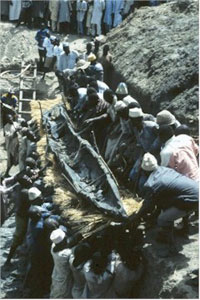
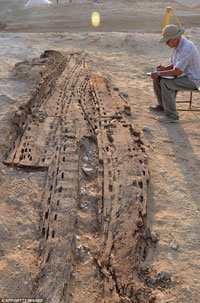
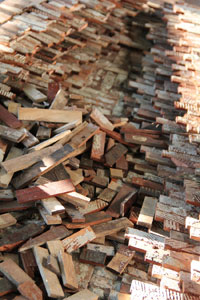
About dis(place) The exhibition dis(place) represents an extension and a shifting of my art-making practice which involves collecting and transforming discarded objects found both in demolished homes and on the sites of their remains. Since experiencing a series of losses of my own homes in the 1990s, I became interested in the phenomenon of displacement and its traumatic effects on the individual. My research in this field focused on the navigation of the constructs of place, memory and identity within the displacement experience. About the series: 101 ways to long for a home The ironically titled series 101 ways to long for a home is an investigation into the way displacement has been dealt with as a knowledge field and the failure of existing theoretical models to explain why resettlement is often not successful. Using devices such as distortion, blurring and fragmentation a story of complex fragility and fluidity is revealed, suggesting the intrinsic qualities of the volatile personalised experience by the displaced. The series is part of a long-term project in which an imaginary manual consisting of 101 artworks in various techniques will be created, all derived from a collage constructed from fragments of images depicting building structures. The 101 artworks will eventually be compiled into an artist’s book format. On display at the dis(place) exhibition are six works in this series, namely: mourn, languish, grieve, lament, yearn and elegy. About the wooden floor blocks The first artwork in which I used parquet floor blocks was constructed from blocks salvaged from a derelict house which was once my home, retrieved a few hours before the house was demolished. The video artwork Traces of transition documents this last visit to my former home. The floor of a house maps the inside spaces of a home, it defines the spaces where people experience their most intimate moments. By retrieving the floor blocks and inverting them in my artworks, I attempted to re-connect to these experiences. In her book The skin of the film, Laura U Marks maintains that objects “are not inert and mute but they tell stories and describe trajectories” (2000:120). In this way, Marks assigns an animated role to objects in which their meaning and significance resides in their physicality, their materiality and their tactility, in the same way “as habit stores memory in the body” (2000:121). For me, the trace-like qualities of erasure and elusiveness inherent in the inverted parquet block fragments imply the imperfect memory processes linked with trauma prevalent during displacement. The wooden blocks in the suspended installation de(part) were sourced from second hand building material shops in Woodstock, Cape Town, also the site of The Lovell Gallery. Since my move to Cape Town in 2008 and my involvement in a residency as an artist at Greatmore Studios in Woodstock, I have been intrigued with this area’s social dynamics of change and transition. As carriers of the history of their places of origin, the discarded wooden blocks in de(part) speak of a collective memory of social upheaval prevalent in urban development. About the boat Archaeological discoveries of boats that have been buried underneath the soil for centuries, such as the Dufuna Canoe in Nigeria (fig 1) and the Egyptian solar boat (fig 2) inspired the visual aesthetic that I was searching for in my planning the construction of de(part) (fig 3). The boat-like structure in the installation de(part) was built by myself and a team of assistants in an extremely laborious process of layering the inverted floor blocks found in Woodstock. Guided and directed by the inherent qualities and materiality of the blocks, the process involved a slow and painstaking uncovering of a visual expression in an attempt to reveal the many narratives and histories that the floor blocks contain, much in the same way that archaeologists meticulously unearth the remains of centuries ago to uncover links in history and humanity.
About the journey In travelling over water - a symbol of the unconscious - a boat has connotations of a vessel transporting the deceased to the afterlife. When linked to the displacement experience, a boat may signify the physical means of displacement, while holding the potential for emotional transcendence. In its suspended state in the gallery, de(part) supports this reference to alternative realms. The journey is through the intangible seas of the psyche and the spirit, and above all the elusive process of recollecting events. It is however, the tangible fragments and weathered brokenness of de(part) which evoke an archeological find and suggest wounding and scarring. de(part) has a ‘post-fossil’ sensibility, creating an awareness of the link between past and future, and providing a vehicle in which the possibility exists for a past traumatic experience to be psychologically transcended through excavation of memory – the afterlife of displacement. About the series: chronicles of the loss of a home In their elliptic formats, the three works in this series, remember, dismember and salvage, evoke a boat-like outline. Remember is constructed from stills of the video Tracing transition, which documents the source of the first wooden floor blocks that I have used in my artworks, while dismember and salvage are created from photographs of the process of building the work de(part). The three works could be read as a narrative of the journey of the wooden floor blocks, where they came from and what became of them. In a metaphorical way it suggests my personal journey in dealing with the displacement experience. Conclusion The artworks in the dis(place) exhibition record the traces of the loss of a home spatially, materially and technically. As a translation from an emotional experience to a visual statement, they seek to raise awareness of the severe effects of displacement on the individual in today’s society. Illustrations: Fig 1: Dufuna canoe dated around 6000BCE, found and excavated in Nigeria. http://academics.tjhsst.edu/canoe/hum/rb/g4/index.html Fig 2: Archaeological site of the roughly 5000 year old pharaonic solar boat discovered near Cairo, Egypt. http://archaeologynewsnetwork.blogspot.com/2012/07/french-archaeologists-unearth-pharaoh.html#.UXyqeOAyHww Fig 3: The artwork dis(place) in progress, March 2013. Photo: Emma Willemse. Bibliography: Marks, L.U. 2000. The skin of the film: intercultural cinema, embodiment, and the senses. Durham: Luke University Press. | ||||||
Website of South African Artists |
 |
||||||