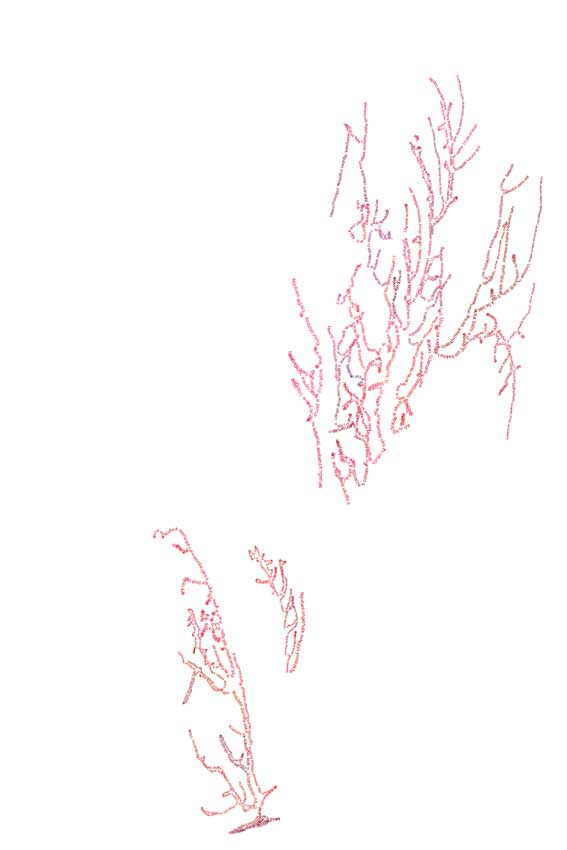
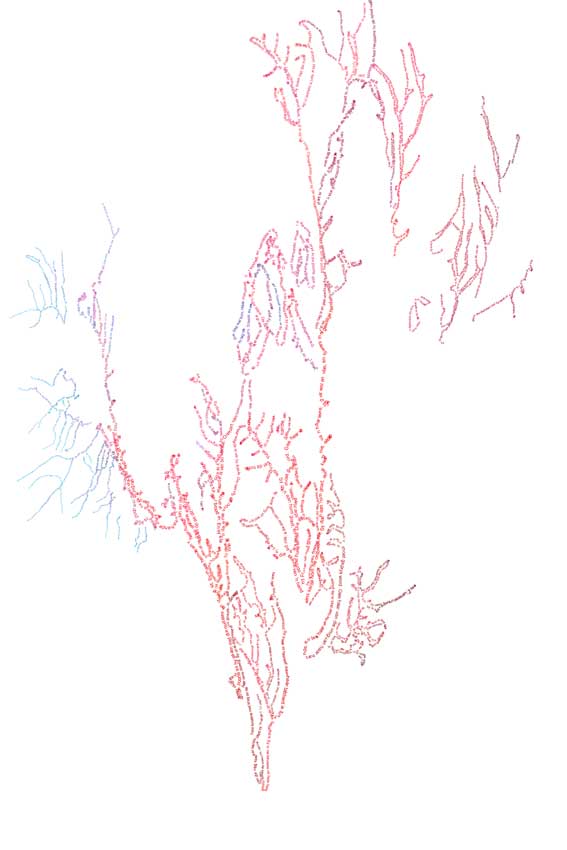
Step into the Shoes
For her price is far above rubies
Digital print on archival media
Inhliziyo yomkakhe ithemba kuye, ukuze angasweli impango
Digital print on archival media
Musadzi vhukuma u do wanwa nga nnyi
Digital print on archival media
Want haar waarde is ver bo korale
Digital print on archival media
Wie sal 'n deugsame vrou vind
Digital print on archival media
Artist Statement The special ladies who have gone before, and who continue to influence me today, have been my inspiration for this artwork. My Transvaal grandmother, Petronella Clasina (Nellie) Botha, taught me to crochet. She had lived through the concentration camps where her first three sisters died. A real boeretannie; she could do absolutely anything, and that on a shoestring. She had a deep enduring faith which carried her and her family through the hard times. My Natal grandmother, Sara Martha Havemann, read us books and taught us about nature and art. Well-educated and well-travelled; a real lady. She sympathised with the Afrikaner plight during the Anglo-Boer war, and she identified with Afrikaans, even though she did not speak the language very well. My father convinced her to speak English to us so that we would become bilingual, and she only agreed to do so when he threatened to do so himself if she refused. Betsie Wessels, my mother, wanted to be a missionary when she was young. Instead, she married my father and moved to KZN. Little did she know that this would become her mission field. Faithfully she visited the town jail and hospital, as well as the rural schools and aged Zulu people in the district. She allowed us to experiment in the kitchen, and nothing was too much trouble for her. She is always ready to lend a sympathetic ear and wise advice. Living on the remote farm without electricity, she would turn any house into a home. Her love of flowers led to her Zulu name “MaBLom”. Johanna Mawela was the least loved Venda wife of an abusive polygamist. She had raised her children single-handedly through sheer determination and courage. She could not read or write, but she spoke about 7 languages. If she needed a recipe or anything else, she simply memorised it. She came to us when her children had grown up. I loved her stories of the Venda traditions. She planted mealies for my children in a flower box, and she bemoaned the fact that her children no longer observed the Venda traditions, and refused to eat Mopanie worms, suurpap and termites. She refused to surrender to self-pity, and her favourite saying was ‘Ek worry nie, die Here sorg’. Then there are the Zulu ladies of my Natal childhood who taught me to speak Zulu, told me many stories, and always made me feel loved and safe. These ladies have a hard life in the beautiful rural areas of KZN – walking long distances to fetch water, often caught in polygamous marriages, looking after numerous grandchildren… I tried to think of appropriate symbols that would honour all these ladies. Hekellappies? Zulu grasswork? Venda fabric? Books? Flowers? In the end, I realised that there truly is only one description that epitomises them all: Proverbs 31:10-31. | |
Website of South African Artists |
 |